

EELISA Podcast - reconnecting Europe by rail: engineering, heritage and the future of Eeuropean mobilities
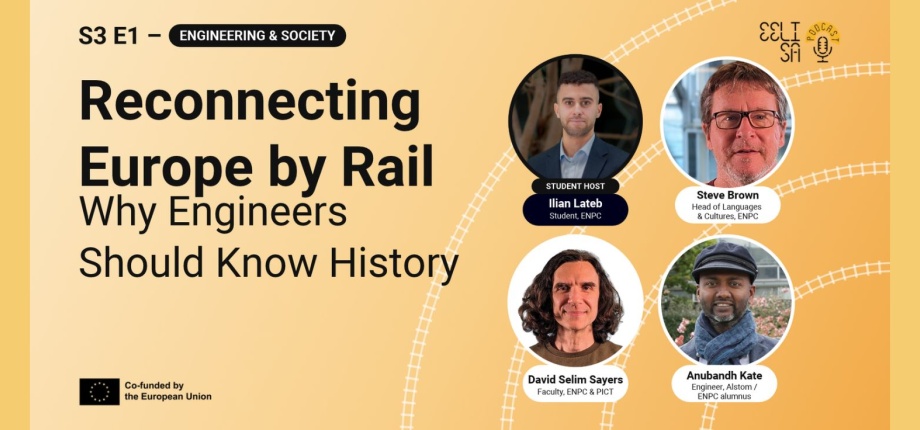
How has rail transport shaped Europe's past, and what role can it play in building a more sustainable and better-connected future? This question lies at the heart of a new episode of the EELISA podcast, featuring voices from the School and bringing together perspectives from engineering, history and the humanities to explore the future of European mobility.
Entitled "Reconnecting Europe by Rail: Engineering, Heritage and the Future of European Mobilities", the episode explores how railways have shaped European territories, fostered exchanges between societies and continue to influence the way we travel and connect across borders.
Railways: connecting European territories and cultures
Since the 19th century, railway networks have profoundly transformed landscapes, economies and relationships between regions. Today, as Europe faces climate challenges and seeks more sustainable mobility solutions, rail transport is once again at the centre of discussions about the continent's future.
Beyond their technical dimension, railways also play a significant role in bringing European citizens closer together by facilitating mobility, cultural exchanges and cross-border cooperation.
The discussion addresses major European railway infrastructure projects, the development of transnational networks and the political, economic and institutional challenges involved in building a more connected European transport system.
Bringing railway history into engineering education
The episode also highlights the Fradet research and educational project, developed at École des Ponts around a collection of 19th-century engineering archives documenting railway construction in the Ottoman Empire.
By exploring these historical documents, engineering students are encouraged to look beyond the technical aspects of infrastructure and examine its social, political and cultural implications.
This interdisciplinary approach illustrates the importance of integrating humanities and critical thinking into engineering education, preparing future engineers to navigate the complexity of major infrastructure projects and understand their broader impact on society.
The podcast also features the perspective of an École des Ponts student who participated in the Fradet project and reflects on his experience collaborating with students from other European universities, particularly in Istanbul and Madrid.
Different perspectives on the future of European mobility
Hosted by Ilian Lateb, a second-year student at the School and EELISA Student Representative, the episode brings together three speakers with complementary backgrounds:
- Steve Brown, Head of the Language and Culture department at the School
- David Selim Sayers, faculty member at the Language and Culture department and member of the Paris Institute for Critical Thinking
- Anubandh Katé, engineer at Alstom and a graduate of the Advanced Master's programme in Railway and Urban Transport Systems at the School
Together, they explore the prospects for a more integrated European railway network, the potential revival of night trains and the development of rail freight, as well as the governance challenges and societal choices that will shape the future of mobility.
The discussion highlights a central idea: designing tomorrow's infrastructure is not only about overcoming technological challenges, but also about understanding the societies it connects and the transformations it enables.