

The School and Bouygues Construction are joining forces to design the building systems of the future
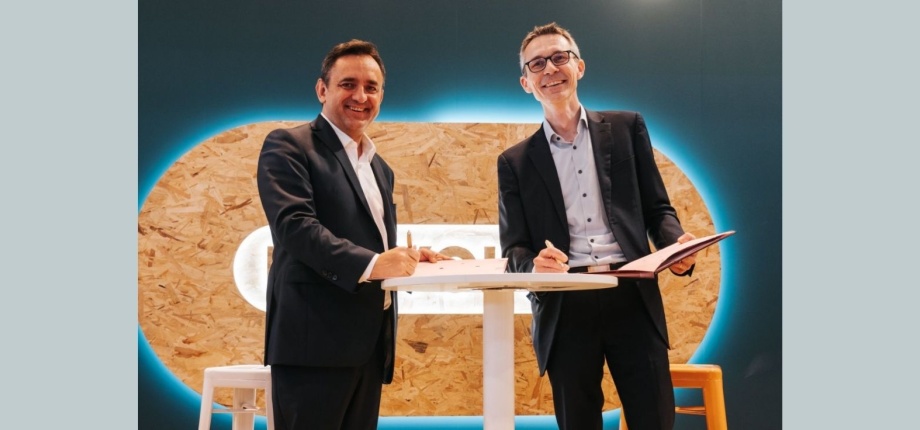
At Viva Technology 2026, the École nationale des ponts et chaussées (ENPC) and Bouygues Construction (BYCN), two leading French and international players in the fields of construction, engineering and innovation, signed a collaboration agreement aimed at developing a new generation of optimised structural systems to reduce material consumption in the construction sector.
Against a backdrop of ecological transition and dwindling resources, this partnership aims to contribute to the emergence of more sustainable construction methods, balancing technical performance, industrial competitiveness and the reduction of carbon emissions associated with construction. In light of this urgent need, this partnership has a dual objective: to go even further in reducing the quantities of materials required for construction and in improving and streamlining processes (cost, quality, deadlines) for construction projects. The official signing took place on 18 June in the presence of Anthony Briant, Director of the School, and Pierre-Éric Saint-André, Managing Director of Bouygues Construction.
From research to innovative, scalable solutions
This collaboration builds on the work already undertaken by the two partners in the field of digital industrial construction.
By combining their scientific, technological and industrial expertise, the teams from ENPC and BYCN will explore new approaches to design and manufacturing based on automation, notably robotics, 3D printing and generative design tools. These technologies enable the design of optimised structures, using only the material necessary for their mechanical performance.
On the Bouygues Construction side, the partnership will involve teams from the Design to Build Lab, the Materials Lab (R&DI) and Scale One®, whilst on the ENPC side, it will involve the Navier laboratory as well as the technological teams of Build’In® and Thinkshell® of the Co-Innovation Lab, a technology laboratory.
This cooperation also builds on several projects already carried out jointly, notably PhD research between Scale One® and the Navier Laboratory, as well as a European project dedicated to an innovative process for reinforcing soils and embankments.
A step-by-step approach to identifying the most promising solutions
The first phase of the partnership will focus on identifying building systems that could benefit from these new technologies and assessing their technical, industrial and economic potential.
For each solution identified, the partners will draw up technical specifications and conduct a market study to define research priorities, deployment conditions and the main obstacles to be overcome.
Following this exploratory phase, and subject to conclusive results, ENPC and BYCN will be able to launch co-development projects aimed at taking the innovations to a testing stage close to real-world application.
©Aurore Baron