

Spanish
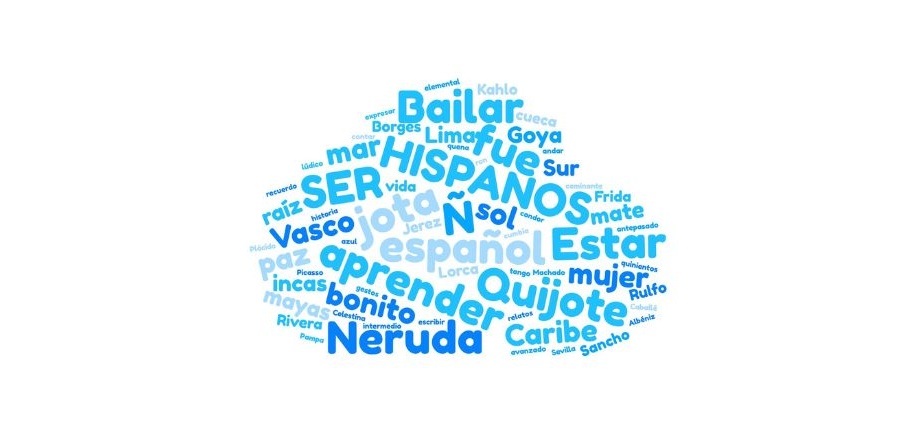
To develop language skills (listening, speaking, reading, writing) and cross-disciplinary skills (teamwork, critical thinking, communication, problem solving, empathy, and intercultural awareness)
Taking Spanish classes as part of your studies at the École nationale des ponts et chaussées is an opportunity to join a large community of SPANISH SPEAKERS who share this official language in twenty Latin American countries, Equatorial Guinea, and Spain. This choice also allows you to broaden your exchanges even in English-speaking countries such as the United States, where Spanish is also widely spoken (one in ten American residents speaks Spanish at home). Therefore, studying Spanish also means discovering and immersing yourself, through language, in a rich array of material, intellectual, artistic, and emotional elements that characterize Spanish-speaking societies and social groups.
Language and culture courses
These are the “Beginners,” “Elementary” (pre-intermediate), “Intermediate Spanish Language and Culture A2-B1,” and “Interactions and Cultures B2” modules. The curriculum for these courses is based on the approach recommended by the Common European Reference Framework for Languages. In this sense, students become “social actors who need to perform tasks (not only linguistic ones) in given circumstances and environments, within a particular field of action” (CEFR, Didier, 2006). In other words, they use Spanish in a wide range of communication situations according to their level and needs. The development of cross-disciplinary skills (creativity, methodology, autonomy, capacity for adaptability, interpersonal skills, etc.) goes hand in hand with learning the spoken and written language. Exposure to the cultural diversity of Spanish-speaking populations plays an important role in the courses.
Thematic language courses
Another way to consolidate your Spanish skills is through specific themes, such as history, music, visual arts, contemporary political or economic issues, theater, cinema, and literature. These include courses such as: “Mirando la actualidad” (Looking at Current Events), “Caribe hispano,” “Lengua y música hispana,” Intercultural Management, “Lengua y cine hispano,” “Escribir y narrar relatos,” “Filosofía en español,” “Debate,” Reading Club, etc. These courses give future engineers a humanistic perspective in addition to language learning. Some of these modules, such as “Escribir y narrar relatos,” involve multilingual projects in which Spanish students interact with international students.
Guided independent study
Students with a very advanced level of language proficiency can opt for an individual learning project supervised by a teacher. They can conduct research on a specific issue or topic through oral and written activities.
“The Reading Club” is a remote and in-person course to improve your Spanish. Exposure to the language through books and discussions with the teacher and other students greatly enriches one’s learning experience.