

Civil Engineering program
M1 Civil engineering and construction
The civil engineering and construction sector, which has long been the core business of the École nationale des ponts et chaussées, is particularly well represented at the national level. Internationally, demand for equipment, infrastructure, and buildings is driving strong growth in the sector:
- major infrastructure projects,
- maintenance and upkeep of existing equipment,
- energy production and storage,
- building renovation and rehabilitation.
Entire cities in certain emerging countries, offshore constructions, transportation networks... Today, construction around the world is at an unprecedented level. Urban concentrations require the invention of entirely new solutions for buildings and infrastructure (very tall buildings, metropolitan networks, etc.). But in a context of climate emergency, biodiversity loss, and land artificialization, the environmental impact of construction is such that a profound renewal of techniques is necessary to reduce energy consumption, limit greenhouse gas emissions, and recycle materials. Soil erosion, pollution, and instability are becoming increasingly frequent. Addressing these issues requires significant advances in soil mechanics and related techniques. The frequency of extreme events is increasing, requiring more resilient buildings and infrastructure. New materials (very high-strength concrete and steel, composites) and new computer-based calculation methods are emerging, revolutionizing the design of buildings and structures. Digitization and robotization are opening up new prospects for efficient and sustainable construction.
As a result of these various transitions, the relationship between society and technology has changed. Great attention must now be paid to context, environment, and users, requiring engineers to be able to explain, negotiate, and debate in order to arrive at the most appropriate technical solutions. These fundamental changes call for high-level design and construction engineers who are able to tackle the complexity of construction systems using a multidisciplinary approach.
The first year of the program (M1 “Civil Engineering and Construction”) provides all the necessary foundations for civil engineering and construction: scientific (mechanics, physics, thermodynamics, etc.), technical (drawing, materials, etc.) and cultural. The M1 is open to students who have not previously studied civil engineering.
Objectives
- Master the scientific, technical, and cultural foundations of civil engineering and construction.
- Master the fundamentals of project planning and design in the fields of structural engineering and geotechnical engineering, adopting a comprehensive approach, a high level of scientific rigor, and strong technical expertise.
- Understand the challenges (environmental, societal, technical, etc.) involved in the construction process.
All courses are delivered at École nationale des ponts et chaussées (Champs-sur-Marne, near Paris), in French.
Semester 1
- Introduction to Drawing and Modeling. 1 ECTS
- Introduction to Construction Materials. 1 ECTS
- “Construction and Living” Week. 1 ECTS
- Built Structures: From Design to Completion. 3 ECTS
- Introduction to Drawing and Modeling. 3 ECTS
- Digital Statistics and Data Analysis. 1.5 ECTS
- Mathematics and Mechanics for Civil Engineering. 4 ECTS
- Soil Mechanics. 3 ECTS
- Elastic Structure Mechanics. 3 ECTS
- Fluid Mechanics. 3 ECTS
- Material Calculation and Behavior. 3 ECTS
- Thermal Engineering. 1.5 ECTS
- Languages. 2 ECTS
Semester 2
- Engineering Geology Week. 0.5 ECTS
- Mathematics and Mechanics for Civil Engineering. 5.5 ECTS
- Mechanics of Elastic Structures 2. 1.5 ECTS
- Plasticity and Failure Analysis. 3 ECTS
- Structural Dynamics. 3 ECTS
- Practical Machine Learning. 3 ECTS
- Structural Design Theory. 3 ECTS
- Geotechnical Design Theory. 3 ECTS
- Design Applied to Structures or Geotechnical Works. 5.5 ECTS
- Languages. 2 ECTS
The master's program prepares students to work in all sectors of the construction industry (buildings, structures, public works, geotechnics, energy facilities, materials, etc.) and opens the door to a wide range of careers: project management, project supervision, design offices, construction companies, research and development, methods.
Graduates go on to work in:
- the design and construction of structures, infrastructure, and buildings,
- the calculation and dimensioning of structures,
- the innovation and development of new materials and new construction techniques,
- the management of large construction projects.
- Matthieu VANDAMME - Coordinator
- Alice PHAM - Program office
- UE/EEA/Switzerland: €4,859
- Non-UE/EEA/ Switzerland: €7,148
- Engineering student from IP Paris schools: €166
M2 Civil engineering and construction
The civil engineering and construction sector, which has long been the core business of the École nationale des ponts et chaussées, is particularly well represented at the national level. Internationally, demand for equipment, infrastructure, and buildings is driving strong growth in the sector:
- major infrastructure projects,
- maintenance and upkeep of existing equipment,
- energy production and storage,
- building renovation and rehabilitation.
Entire cities in certain emerging countries, offshore constructions, transportation networks... Today, construction around the world is at an unprecedented level. Urban concentrations require the invention of entirely new solutions for buildings and infrastructure (very tall buildings, metropolitan networks, etc.). But in a context of climate emergency, biodiversity loss, and land artificialization, the environmental impact of construction is such that a profound renewal of techniques is necessary to reduce energy consumption, limit greenhouse gas emissions, and recycle materials. Soil erosion, pollution, and instability are becoming increasingly frequent. Addressing these issues requires significant advances in soil mechanics and related techniques. The frequency of extreme events is increasing, requiring more resilient buildings and infrastructure. New materials (very high-strength concrete and steel, composites) and new computer-based calculation methods are emerging, revolutionizing the design of buildings and structures. Digitization and robotization are opening up new prospects for efficient and sustainable construction.
As a result of these various transitions, the relationship between society and technology has changed. Great attention must now be paid to context, environment, and users, requiring engineers to be able to explain, negotiate, and debate in order to arrive at the most appropriate technical solutions. These fundamental changes call for high-level design and construction engineers who are able to tackle the complexity of construction systems using a multidisciplinary approach.
The M2 track “Civil Engineering and Construction” allows students to deepen their knowledge in various areas of construction, particularly structures, geotechnics, and buildings. The M2 track is professionally oriented and allows for rapid entry into the workforce, but continuing on to a doctoral thesis after obtaining the M2 is possible and encouraged.
Objectives
- Master all the scientific, technical, and cultural knowledge and skills necessary for a career in civil engineering and construction.
- Master advanced project and design tools in one of the construction sectors (buildings, civil engineering structures, public works, geotechnics, structures, energy facilities, etc.), adopting a comprehensive approach, a high scientific level, and a strong technical expertise.
- Know how to assess and reduce the environmental impacts of construction.
All courses are delivered at École nationale des ponts et chaussées (Champs-sur-Marne, near Paris), in French.
Semester 1
The following courses must be taken:
- Thematic opening weeks. 4 ECTS
- Project (bioclimatic building, dam, offshore wind farm, bridge, or road). 7.5 ECTS
- Life Cycle Analysis. 3 ECTS
- Languages. 2 ECTS
At least 3 courses to be chosen (including at least 1 materials course and at least 1 advanced course) from among:
- Reinforced and Prestressed Concrete. 3 ECTS
- Wood Structures. 3 ECTS
- Steel Structures. 3 ECTS
- Advanced Structural Dynamics. 3 ECTS
- Advanced Structural Design. 3 ECTS
- Finite Elements for Civil Engineering. 3 ECTS
- Advanced Geomechanics and Geotechnics. 3 ECTS
- Advanced Concrete. 3 ECTS
To achieve 30 ECTS credits for the semester, students must complete electives chosen from among:
- Civil Engineering Project Management and Economics. 3 ECTS
- Building Energy Efficiency. 3 ECTS
- Acoustics. 1.5 ECTS
- Bridge Design and Construction. 3 ECTS
- Structures, Energy, and Risks. 3 ECTS
Semester 2
4-to-6-month internship.
The M2 track “Civil Engineering and Construction” allows graduates to work in all sectors of construction (buildings, structures, public works, geotechnics, energy facilities, etc.) and opens up a wide range of career opportunities: project management, project supervision, design offices, construction companies, research and development, methods.
Graduates go on to work in:
- the design and construction of structures, infrastructure, and buildings,
- the calculation and dimensioning of structures,
- the innovation and development of new materials and new construction techniques,
- the management of large construction projects.
- Matthieu VANDAMME - Coordinator
- Alice PHAM - Program office
- UE/EEA/Switzerland: €4,859
- Non-UE/EEA/ Switzerland: €7,148
- Engineering student from IP Paris schools: €166
M2 Mechanics of Soils, Rocks, and Structures in their Environment (MSROE)
The Masters 2 MSROE program is jointly accredited by Institut Polytechnique de Paris (ENPC), Université Paris-Saclay (CentraleSupélec) and Sorbonne Université. Although focusing on Geotechnics, it can fairly claim to work at the overlap between mechanical engineering and civil engineering, with its emphasis on the modelling of the behavior of materials, structures and their environment, an overlap moreover reflected in joint computational codes.
The builder’s art is becoming an increasingly stimulating field of expertise, with the diminishing numbers of “easy” sites, the need for development planning at urban and regional level, international competition, and society’s environmental expectations.
Objective
Reflecting these requirements, the MSROE Masters program trains people in effective geotechnical modelling skills, with a focus on aspects where current and future industrial demand is high, such as urban development and development in difficult environments, geotechnics associated with pollution, waste, and major risks, and more generally the protection of the environment.
These spheres of application, characterized by their difficult conditions, require developments in research topics such as:
- adjustment to major topological disparities, contingencies, and the regionalization of errors and uncertainty;
- real behavior of materials under complex loads;
- interactions and couplings (solids, liquids, gases);
- validation of codes and procedures, reidentification of parameters, inverse problems.
Benefits
- Degree that reflects high industrial demand
- Inter-establishment teaching staff with several specialists of international repute
- Combination of theory and practice
- Wide range of internships and theses
- Links with industry
Career Opportunities
The specialism can lead equally to immediate entry into employment and to PhD research.
It provides openings for:
- research careers in major research institutions, research centers, university research departments;
- research and development careers in companies, and careers in engineering and consultancy.
The technological fields particularly concerned are:
- Civil Engineering buildings and structures
- the water and environment industries
- waste management
- natural risks
- engineering and technical consultancy.
- Anh Minh TANG
Director of the ParisTech MSROE Masters programme
Tel: +33 (0)1 64 15 35 63 - Alice PHAM
Coordinator of the ParisTech MSROE Masters programme
Tel: +33 (0)1 64 15 36 84
- UE/EEA/Switzerland: €254
- Non-UE/EEA/ Switzerland: €4,317
- Engineering student from IP Paris schools: €166
M2 Materials Science for Sustainable Construction (SMCD)
The emergence of the sustainable development concept has considerably tightened the criteria that materials and processes should satisfy, in terms of energy and commodity consumption, in addition to strength and durability. Materials should be thermally insulating, light, easily workable and recyclable in environmentally friendly processes. Even if in the last few years many progresses have been made, many problems remain to be solved. The only way to meet these new challenges is to combine multidisciplinary approaches in engineering, as scientific, technical and industrial challenges should be successfully tackled.
Objectives
The Master’s program provides the scientific foundations necessary for a multidisciplinary and multi-scale approach to material behavior, optimization of their manufacturing processes, their functional properties, and their durability under specific environmental conditions. Organized into thematic modules in physics, mechanics, chemistry, and numerical simulation, as well as modules addressing environmental and energy issues, this program prepares students for research and development careers in cutting-edge companies and research laboratories.
Master's Benefits
- Multidisciplinarity: Physics, Chemistry, Mechanics and Applied Mathematics
- Wide open vision of the research and innovation in construction
- Opportunity to meet internationally recognized researchers
- Close contact with industrial and academic research
- Personalized monitoring
Career prospects
The Master’s program prepares students for research and development careers in companies and major public research institutions in the fields of materials science, innovation, and construction. Continuing with a PhD is strongly recommended.
Laboratories and companies where Master’s students have pursued PhD research: Aarhus University (Denmark), École des Mines de Douai, École Polytechnique, École Polytechnique Fédérale de Lausanne, École Normale Supérieure de Saclay, ESPCI, Université Gustave Eiffel, Imperial College, INSA Strasbourg, Institut Jean le Rond d'Alembert, Harvard University, Laboratoire Navier, Holcim Research Center, Michelin, Saint-Gobain Research, Université de Bourgogne, Université Claude Bernard, and more.
Alumni employers: CEA, Centre Scientifique et Technique du Bâtiment, École nationale des ponts et chaussées, École Nationale Supérieure des Arts et Métiers, Électricité de France, Eurinnov, Géodynamique et Structures, IFP-Énergies Nouvelles, Université Gustave Eiffel, École Normale Supérieure de Saclay, Chryso, RATP, Lafarge, Saint-Gobain, Schlumberger, Socotec, ETH Zurich, etc.
The program runs over one academic year:
- Late September to late February: Coursework and project
- Early March to late August: Research internship
Courses
All courses are taught in English:
- Bio-based construction materials
- Raw earth: A solution for tomorrow? – One-week workshop
- Physicochemistry of construction materials
- Imaging of random media
- Nuclear magnetic relaxation for materials science
- Sustainable construction
- Soft matter physics
- Poromechanics and physics of porous solids
- Fluids and grains: Rheology and mixing
- Complex fluids
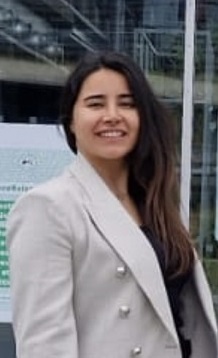 "The SMCD program has indeed been an enlightening journey, characterized by a flexible, diverse, and multidisciplinary curriculum. Delving into various approaches like physics, chemistry, mechanics, and simulations to comprehend material behavior has significantly expanded my knowledge, particularly in engineering disciplines. Learning from experienced and prominent professors has been a valuable asset, allowing me to draw from their rich expertise. This program has not only equipped me with a profound understanding of sustainable materials but has also provided a unique opportunity to start my career in research in the domain of earthen materials," Ghida, 2022-2023.
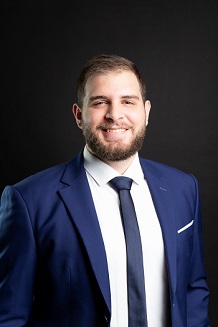 "The SMCD program was a determining factor in the following steps of my career. It may have been due to the passion the professors showed for their specific subjects or perhaps the level of comprehension being passed down to me as a student, perhaps even both. Through conclusion of the SMCD courses, I was more than confident that I had the tools and the motivation to pursue a PhD. However, more than just knowledge and passion for science, the course also opened many doors to continue working with material science in the industry or in academia, thanks to its renown and the contact with the teachers. I did not need to search for a PhD or a role as a materials engineer, I had the opportunity of choosing one," João, 2022-2023.
Xavier Chateau - Head of "Materials Science for Sustainable Construction" Master
Alice Pham - Program Administrator of "Materials Science for Sustainable Construction" Master
Tel: + 33 (0)1 64 15 36 84
- UE/EEA/Switzerland: €254
- Non-UE/EEA/ Switzerland: €4,317
- Engineering student from IP Paris schools: €166
Admission
These programs are open to French, European, and international students.
To apply for an M1, you must hold a bachelor's degree (awarded by a French institution), an international bachelor's degree, or an equivalent qualification (180 ECTS credits).
Applications for M1 programs must be submitted via the Institut Polytechnique de Paris registration platform or the "Mon Master" website.
To apply for an M2, you must have earned 60 ECTS credits in a Master's program or hold a degree corresponding to 240 ECTS credits, or hold a Master's degree.
Applications for M2 programs must be submitted via the Institut Polytechnique de Paris registration platform.
Engineering students from the Institut Polytechnique de Paris schools have the opportunity to enter directly into the second year of a Master's degree program.
Admission calendar
Application on "Mon Master" website:
- Starting in February 2026
Applications via the Institut Polytechnique de Paris registration platform
- Session 1: from 29 Octobre 2025 to 8 January 2026
- Session 2: from 9 January 2026 to 26 March 2026
- Session 3: from 27 March 2026 au 28 May 2026 (some masters are not open during the 3rd session)