

CERMICS becomes a joint research unit with CNRS
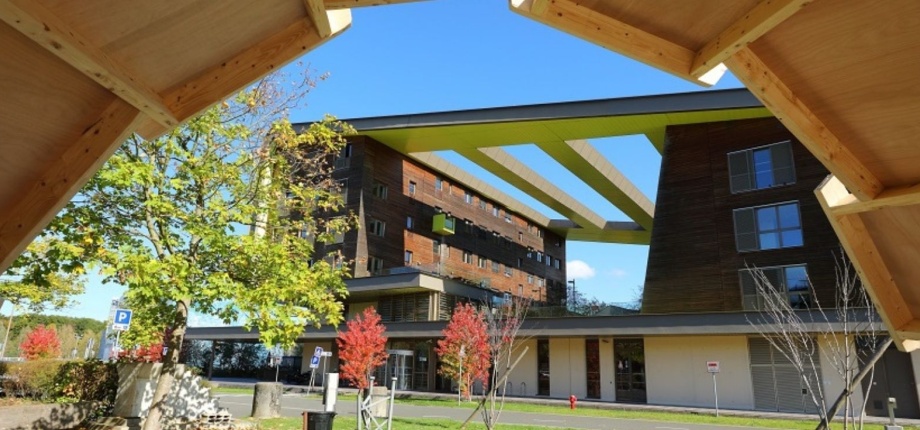
The École nationale des ponts et chaussées Research Center in Mathematics and Scientific Computing (CERMICS) became a joint research unit with CNRS (UMR 9032) on January 1st, 2026, affiliated with the National Institute for Mathematical Sciences and their Interactions (Insmi), thereby cementing the scientific relationship between the two institutions.
An interdisciplinary laboratory
Since its creation in 1996 following the merger of the Center for Teaching and Research in Mathematics (CERMA) and CERMICS, it has been at the crossroads of mathematics, engineering sciences, and industrial applications. Its scientific themes are structured around three areas:
- Modeling, analysis, and simulation (with a particular focus on the theoretical and numerical analysis of partial differential equations)
- Optimization (with a strong emphasis on operational research alongside stochastic optimization
- Applied probability (particularly around stochastic differential equations)
This interdisciplinary nature is expressed “both within mathematics, with in particular the combination of deterministic and stochastic approaches, and in science in general,” explains Gabriel Stoltz, director. This openness translates into numerous interactions and applications with industrialists and scientists from other fields: chemistry, physics, mechanics, materials science, biology, computer science, finance, economics, transportation, and energy. “From a methodological point of view, the research conducted at the laboratory often addresses a scientific problem vertically, from the modeling phase to the practical implementation of numerical solutions,” concludes Gabriel Stoltz.
Strong ties with the CNRS, confirmed by the transition to a joint research unit (UMR)
CERMICS maintains numerous links with other research organizations: it has a longstanding relationship with Inria, which continues today through joint project teams, and is developing its collaborations with partners at the Institut Polytechnique de Paris, notably with the Fondation Mathématiques Jacques Hadamard. Its links with the CNRS are embodied in the Bézout research federation, created in 2011, of which CERMICS is a member alongside the Laboratory of Analysis and Applied Mathematics (LAMA) and the Gaspard-Monge Computer Science Laboratory (LIGM).
“CERMICS' participation in the Bézout Federation has helped to anchor the CNRS in the collective imagination of the laboratory and to measure in concrete terms the benefits of an association with the CNRS,” explains Gabriel Stoltz.
For the laboratory, this development represents a major scientific challenge, in a context of balance between fundamental research and collaborative partnerships. From this perspective, UMR status offers significant opportunities, particularly through the recruitment of CNRS research staff, which would strengthen the skills and diversity of scientific profiles within CERMICS. The laboratory is a favorable environment for CNRS researchers due to its human scale, the complementary nature of the mathematical approaches carried out there, and the original and rich scientific questions that naturally emerge from its strong links with civil society and the socio-economic world.
CERMICS will continue to focus on the themes at the heart of its activity while remaining attentive to emerging topics where mathematics plays a fundamental role. Particular attention will be paid to machine learning and artificial intelligence, with a view to strengthening existing scientific clusters in order to "develop machine learning tools and methods in new contexts that are still relatively unexplored, such as operational research, molecular simulation, and risk modeling. More generally, this new joint research unit will provide an opportunity to strengthen the continuity between fundamental and applied research, as the two feed off each other," concludes Gabriel Stoltz.
CERMICS' priority for the coming years is to continue on its scientific trajectory, in particular by maintaining its scientific output at the highest international level (in terms of both quality and quantity); by preserving a balance between academic research and industrial collaborations; and by covering a wide range of applications in an interdisciplinary spirit, both within mathematics and within the sciences in general.
Gabriel Stoltz